
(07) 3040 6374
Servicing QLD, NSW, VIC, ACT & SA Metro
[email protected]
We respond quickly to all enquiries
Flood Barriers vs Sandbags
Custom Sized For Your Site
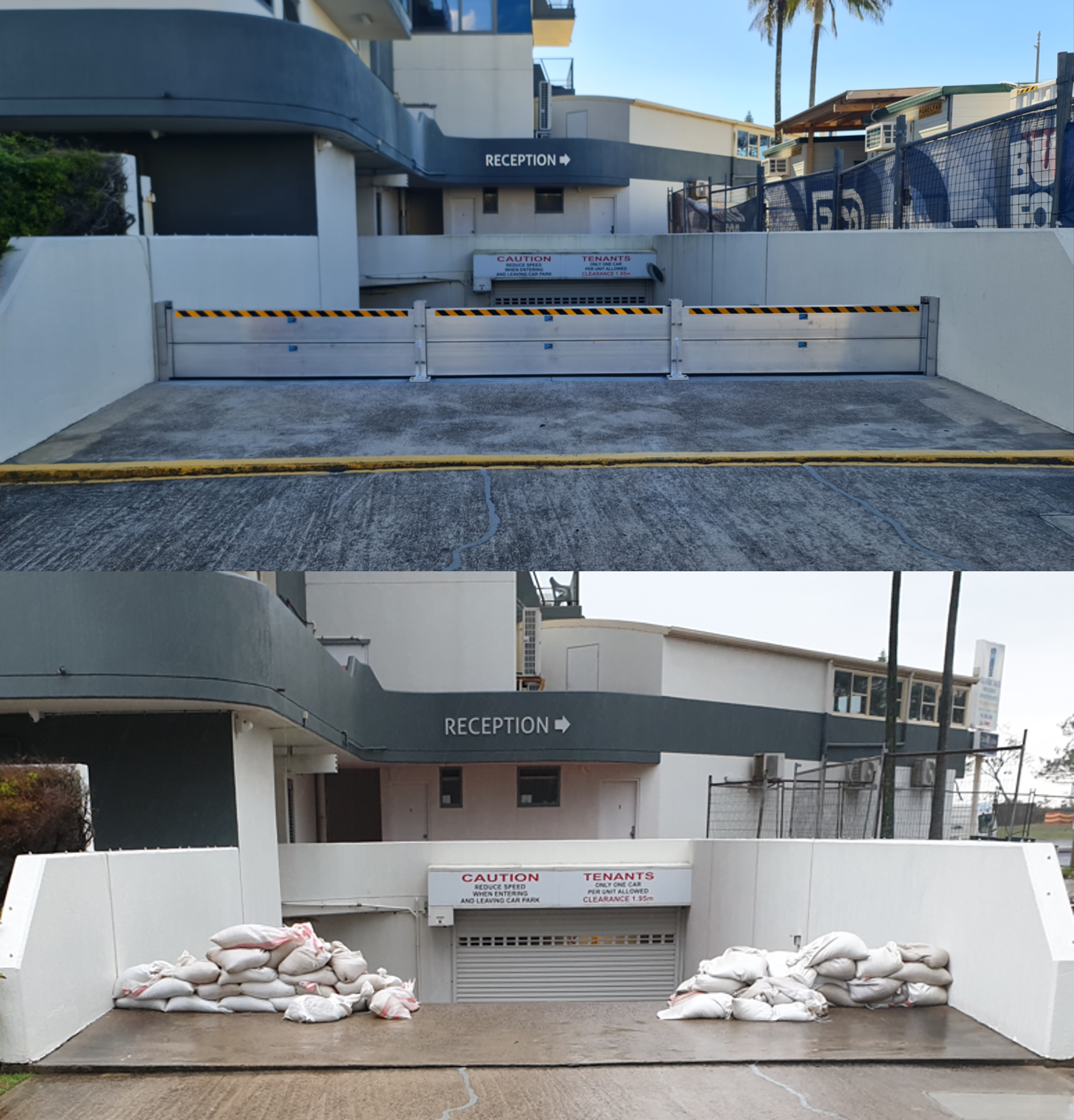 Flood Barrier vs Sandbags
Sandbags often fail to prevent water entering basement ramps, while installed flood barriers provide a continuous physical barrier against floodwater ingress.
Flood Barriers vs Sandbags
Flood protection is critical for homes, commercial buildings and infrastructure exposed to heavy rainfall and flood risk. Sandbags have traditionally been used as a temporary response, but modern flood barrier systems provide a more reliable and effective way to help prevent floodwater ingress.
This page compares flood barriers and sandbags to help you choose the most suitable flood protection solution for your property or project.
Flood Barriers vs Sandbags – Which is Better?
In most situations, flood barriers provide more reliable protection than sandbags, particularly for basement car parks, driveways, commercial buildings and other high-risk flood areas.
While sandbags may still be used for short-term emergency response, they are labour-intensive, prone to leakage and often unreliable during severe flood events. Flood barriers, by contrast, are designed to reduce water entry and perform under real flood conditions.
Flood barriers are commonly used as part of broader flood mitigation strategies for buildings and infrastructure where reliable performance is needed to reduce damage risk and protect critical assets.
What Are Sandbags?
Sandbags have been used for decades as a temporary method of flood control. They are typically filled with sand and stacked to form a barrier intended to slow or divert floodwater.
Sandbags are most commonly used for:
- emergency flood response
- temporary protection of doorways and openings
- short-term flood events
Why Sandbags Often Fail
Although sandbags are widely used, they have several limitations that reduce their effectiveness during real flood events.
- Time-consuming deployment
Sandbags must be filled, transported and stacked manually, which takes valuable time during an emergency. - Labour intensive
Large numbers of sandbags are often required, meaning installation can depend on multiple people being available. - Water seepage
Sandbags do not create a watertight seal, so water can still pass through gaps and between layers. - Unreliable during severe flooding
In fast-moving or high-volume flood events, sandbags can shift, collapse or fail. - Storage and disposal issues
Sandbags need to be stored before use and often disposed of after contamination.
What Are Flood Barriers?
Flood barriers are engineered systems designed to help prevent floodwater entering buildings, basements, driveways and other vulnerable access points.
They are designed to withstand water pressure and are often used in flood mitigation strategies for buildings and infrastructure where reliable protection is required.
Flood barrier systems can include:
- Self-activating flood barriers
Passive systems designed to activate automatically as water rises - Demountable flood barriers
Barriers installed when flood conditions are expected
Why Flood Barriers Are More Effective
Flood barriers are designed to provide more reliable protection than sandbags in real flood conditions.
- Self-activating or faster deployment
Self-activating systems require no manual setup, while demountable systems are quicker to install than sandbags. - Improved sealing performance
Flood barriers are designed to reduce water ingress far more effectively than stacked sandbags. - Reliable under pressure
Engineered flood barriers are designed to perform under hydrostatic water pressure during flood events. - Reusable systems
Flood barriers can be used repeatedly without the storage and disposal issues associated with sandbags. - Suitable for commercial applications
Flood barriers are commonly used for basement car parks, warehouses, infrastructure and other areas where reliability is critical.
Flood Barriers vs Sandbags Comparison
Sandbags
- manual deployment
- poor sealing
- unreliable in heavy flooding
- single-use / disposal issues
- limited suitability for commercial applications
Flood Barriers
- self-activating or fast deployment
- strong sealing performance
- designed for real flood conditions
- reusable
- suitable for both residential and commercial flood protection
Flood Barriers vs Sandbags Comparison
| FEATURE | SANDBAGS | FLOOD BARRIERS |
| Deployment | Manual, slow | Self-activating or quick install |
| Labour | High | Low |
| Sealing | Poor | High |
| Reliability | Low in severe floods | Designed for flood conditions |
| Reusability | No | Yes |
| Suitable for commercial use | Limited | Yes |
When Sandbags May Still Be Used
Sandbags may still have a role in:
- emergency situations
- temporary flood response
- lower-risk applications
However, they are generally not suitable as a long-term or high-reliability flood protection solution.
Choosing the Right Flood Protection
Residential properties
Demountable flood barriers can provide a more practical and reliable solution for homes, garages and driveways.
Commercial buildings
Self-activating flood barriers are often preferred for basement car parks, warehouses and infrastructure where reliable performance and passive operation are important.
Supporting Flood Mitigation Strategies
Flood barriers can form part of broader flood mitigation strategies used in building design and infrastructure planning. By helping prevent floodwater entering key areas, they reduce flood damage risk and support property resilience in flood-prone locations.
Need a Better Alternative to Sandbags?
If you are currently relying on sandbags, or looking for a more reliable flood protection solution, Flow Defence provides self-activating and demountable flood barrier systems for residential and commercial applications.
Related Resources
• How Automatic Flood Barriers Work
• Basement Flood Protection Guide