
Self-Activating Flood Barrier Installation
Flow Defence provides installation support for self-activating flood barrier systems used in commercial basement entries, residential driveways and other flood prone access points.
Our installation process helps ensure the barrier system is set out correctly, installed accurately and integrated with the surrounding civil and structural works.
To learn more about system operation, layout planning and ongoing servicing, see our How Self-Activating Flood Barriers Work, Self-Activating Flood Barrier Sizing & Setout and Self-Activating Flood Barrier Maintenance pages.
We support two installation methods for self-activating flood barriers:
- precast concrete chamber installation
- cast in-situ concrete chamber installation
Installation Built Around the Project Requirements
Self-activating flood barrier installation requires more than placing a product into an opening. The barrier system must work with the chamber, penetrations, pumps, structural framing, grate interface and surrounding construction.
Flow Defence follows a staged installation approach that helps reduce errors, improve coordination and ensure the barrier is ready for commissioning.
For layout planning and opening-specific design considerations, see Self-Activating Flood Barrier Sizing & Setout.
Our Installation Process
Installation Planning and Documentation
Before installation begins, we review key project documentation including installation checklists, subcontractor competency records and shop drawings to confirm the system is aligned with the design intent and client requirements.
Site Preparation Before Installation
Prior to commencement, the chamber, penetrations and unistrut channels are checked to make sure they are clean, accessible and ready to receive the barrier components.
Barrier and Structural Installation
The horizontal seal, flood barrier, structural channels, grate frame and grate angle are installed in sequence to ensure the system is positioned correctly and can operate as intended.
Pump Installation
Pumps, float switches and associated pipework are installed within the chamber to support the operation of the self-activating barrier system.
For a broader explanation of passive operation, buoyancy and chamber behaviour, read How Self-Activating Flood Barriers Work.
Installation Stages Typically Include
- review of installation checklists and shop drawings
- verification of subcontractor competency requirements
- preparation of unistrut channels and chamber penetrations
- cleaning and inspection of the concrete chamber
- installation of the horizontal seal plate
- alignment and lowering of the flood barrier
- installation of structural support channels and grate frame
- positioning of grate angles and fixings
- installation of pumps, float switch and pipe connections
- preparation for commissioning and handover
For final handover and ongoing servicing guidance, see Self-Activating Flood Barrier Commissioning and Self-Activating Flood Barrier Maintenance.
Precast Concrete Chamber Installation
For projects using a precast concrete chamber, the final installation stage includes additional handling and placement steps before the barrier system is ready for completion.
Traffic Management and Site Coordination
The principal contractor is typically required to provide traffic management and prepare the excavation area before the precast chamber is delivered and lifted into place.
Blinding Layer and Levelling Shims
The blinding layer is cleaned and levelling shims are set to establish the correct chamber position before placement.
Chamber Placement
The precast chamber is lifted from the delivery vehicle and lowered into the prepared excavation.
Final Support and Backfill Preparation
Flowable fill is placed beneath the chamber as required, and the principal contractor is instructed on backfill requirements and plumbing connections.
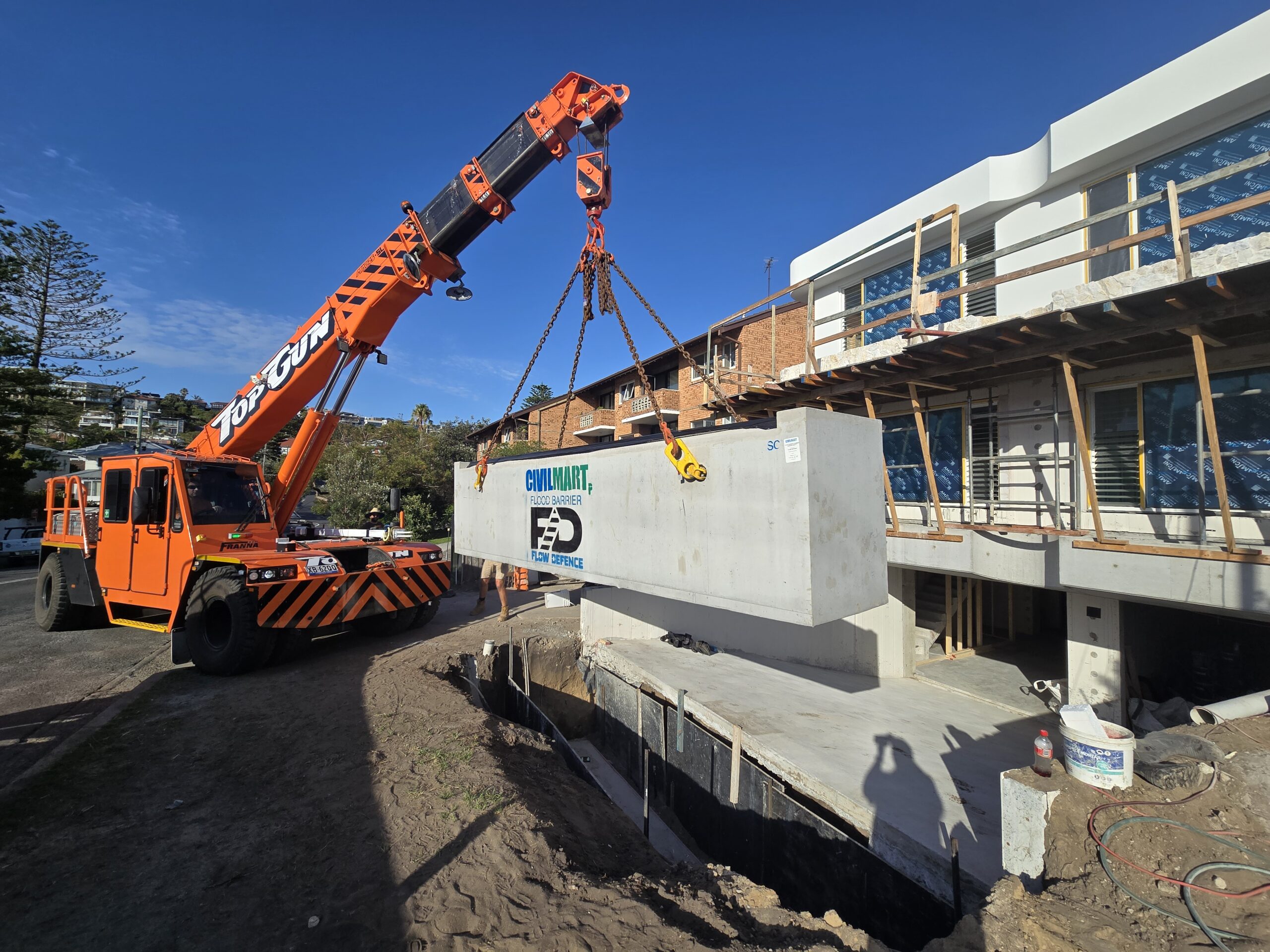
Precast Flood Barrier Chamber
Freshwater NSW
Cast In-Situ Concrete Chamber Installation
For cast in-situ concrete chamber applications, the chamber itself is formed and poured as part of the project structure before the self-activating flood barrier components are installed.
This means the installation focus is generally on:
- confirming the chamber is constructed to the required dimensions
- checking penetrations, embeds and channels are clear and correctly positioned
- installing the barrier, seals, structural frame and pump system into the completed chamber
- preparing the system for final testing and commissioning
Cast in-situ installations can simplify chamber placement logistics on some projects, while still requiring careful setout and coordination to ensure the barrier system fits and performs correctly.
For chamber planning and final handover requirements, see Self-Activating Flood Barrier Sizing & Setout and Self-Activating Flood Barrier Commissioning.
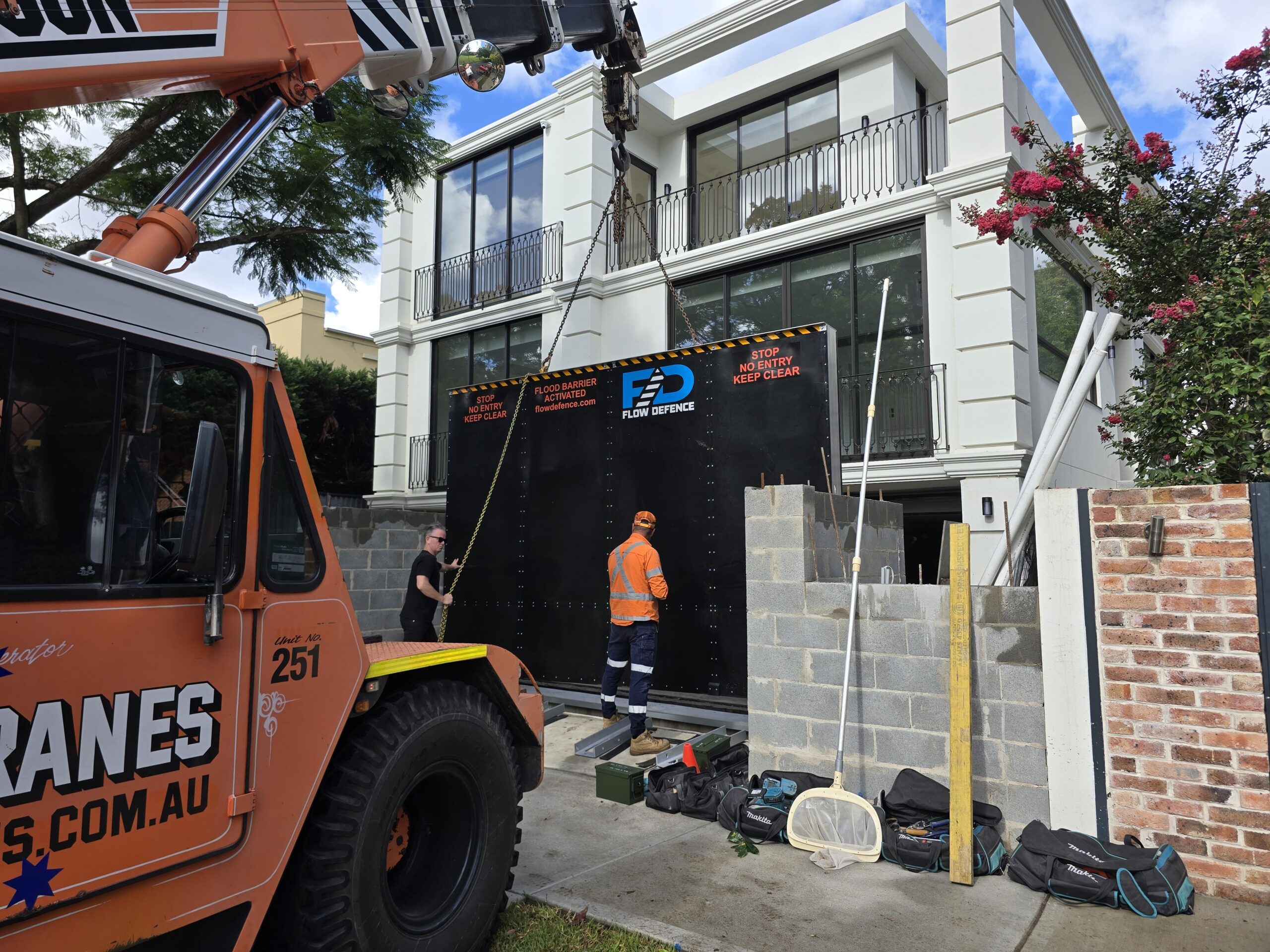
Cast In-Situ Flood Barrier Chamber
Woollahra NSW
Why the Installation Method Matters
The chamber construction method affects how the self-activating flood barrier is sequenced, coordinated and completed on site.
Precast Chambers
Precast chambers can help streamline some site works, but they require delivery, lifting, placement and interface coordination during installation.
Cast In-Situ Chambers
Cast in-situ chambers are built as part of the structure, which can suit some project conditions but still requires accurate construction and careful preparation before barrier components are installed.
This helps ensure the barrier system is installed to suit the actual site conditions and project sequence.
For more detail on project planning and completed system performance, see Self-Activating Flood Barrier Sizing & Setout and Self-Activating Flood Barrier.
Suitable for Commercial and Residential Flood Protection Projects
Self-activating flood barrier installation can be adapted for a range of project types, including:
- basement car park entries
- residential driveways
- multi-residential developments
- commercial access points
- industrial openings
- retrofit flood protection works
- new-build flood mitigation projects
These systems are commonly used across Commercial Flood Protection Solutions and Residential Flood Protection applications.
Installation Support From Flow Defence
Flow Defence works with builders, contractors, consultants and asset owners to support self-activating flood barrier installation from planning through to system completion.
Our goal is a practical, well-coordinated installation that is ready for commissioning and long-term operation.
For the next stage after installation, see Self-Activating Flood Barrier Commissioning.
Need Help With a Self-Activating Flood Barrier Installation?
Speak with Flow Defence about self-activating flood barrier installation for precast or cast in-situ concrete chamber applications.
We can help you determine the right installation approach for your project and support the process through to commissioning.
You can also review our Self-Activating Flood Barrier, Self-Activating Flood Barrier Commissioning and Self-Activating Flood Barrier Sizing & Setout pages.