
Self-Activating Flood Barrier Sizing & Setout
Each Flow Defence self-activating flood barrier is custom sized to suit the opening, flood risk and site layout for commercial, residential and infrastructure applications. This page outlines the practical sizing and setout considerations used when planning a barrier for a basement ramp, driveway, garage entry, doorway or other vulnerable access point.
To learn more about system operation, project delivery and ongoing servicing, see our How Self-Activating Flood Barriers Work, Self-Activating Flood Barrier Installation, Self-Activating Flood Barrier Commissioning and Self-Activating Flood Barrier Maintenance pages.
Why Sizing and Setout Matter
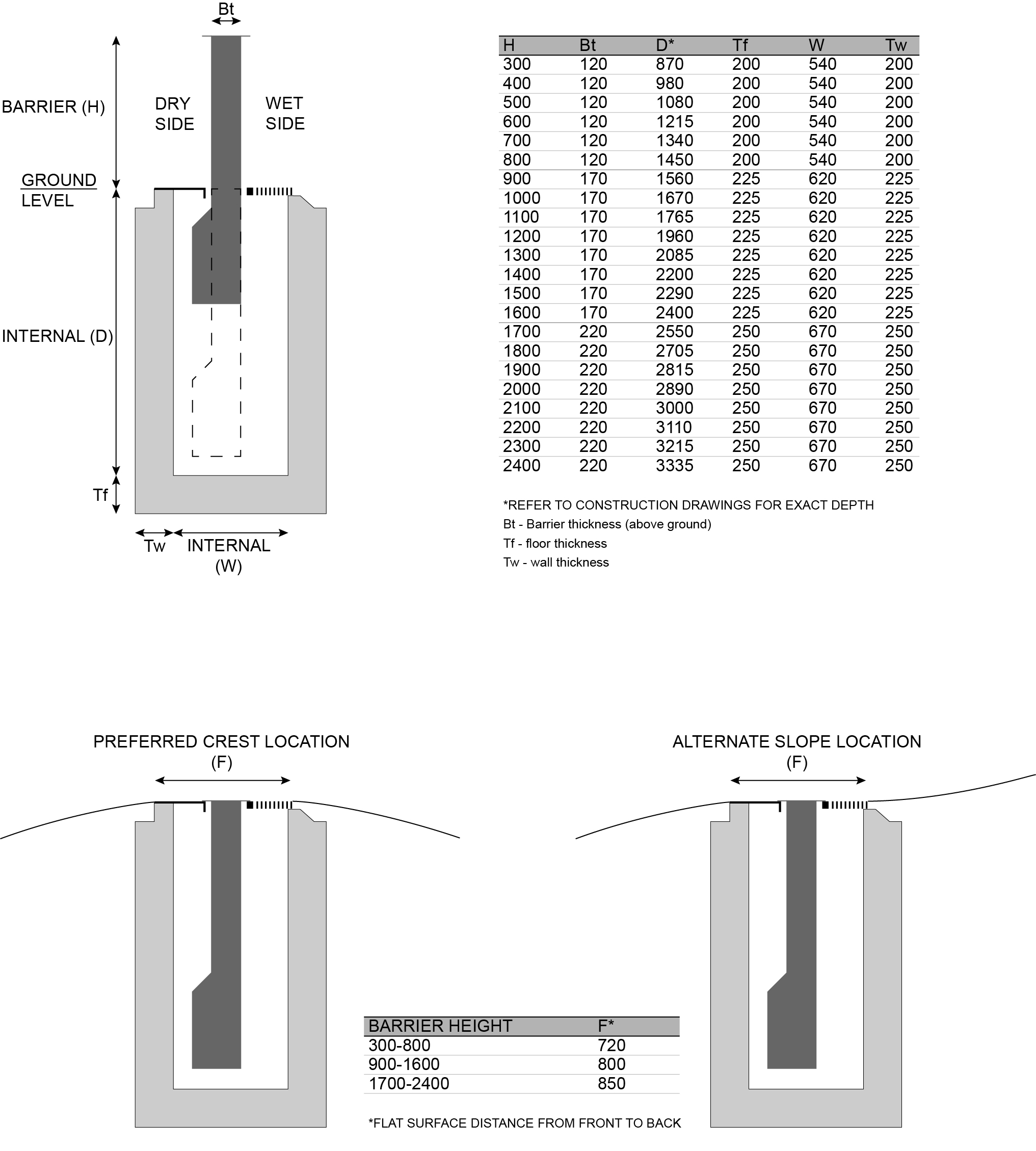
Correct sizing and setout are critical to the performance of a self-activating flood barrier. The barrier must be matched to the required protection height, the clear opening width, the surrounding structure, and the available space for the below-ground chamber.
A well-planned layout helps ensure the barrier fits the site correctly, seals against the surrounding structure, remains practical for day-to-day access, and can be inspected and maintained over the long term.
For an overview of applications, benefits and system suitability, visit Self-Activating Flood Barrier.
Opening Widths, Crest Locations And Chamber Planning
Flow Defence self-activating flood barriers are custom sized to suit the opening dimensions, flood risk and site-specific requirements.
Barrier Height
Barrier height is selected based on the required design water level at the opening. This is usually informed by flood advice, hydraulic design criteria, council requirements or project-specific engineering inputs.
Barrier Width
Barrier width is generally based on the clear opening to be protected, such as a basement ramp, driveway, garage entry, doorway, walkway or other access point.
Chamber Size
Because the barrier is concealed below ground, the chamber also needs to be sized to suit the barrier and the site layout. This includes allowance for the barrier housing, grates, pump arrangement and access for inspection and maintenance.
For a broader explanation of passive operation and water collection, read How Self-Activating Flood Barriers Work.
Site Planning And Construction Considerations
Opening Location
The barrier should be positioned to intercept water before it reaches the vulnerable area, while still allowing normal vehicle or pedestrian use in everyday conditions.
Property Boundary And Footprint
Flow Defence self-activating systems are designed as a self-contained unit. In many applications, the entire barrier can be installed within the property boundary without requiring remote service pits, which can simplify setout on constrained sites.
Chamber And Service Coordination
The chamber must be coordinated with surrounding civil, structural and hydraulic works. Existing services, drainage lines, penetrations, pumps and other underground elements should all be reviewed during the setout stage.
Surface Levels And Falls
Finished levels, gradients and driveway falls influence how water reaches the chamber and how the system integrates with the opening. These levels should be reviewed carefully during design.
For construction-stage guidance and coordination requirements, see Self-Activating Flood Barrier Installation.
Maintenance Access
Removable grates and ground-level access to the chamber are important practical considerations. The setout should allow safe access for inspection, cleaning, pump servicing and debris removal.
Debris Management
Setout should account for surface grates, chamber access and internal sump space so the system can manage debris and settled particles as part of routine maintenance.
For ongoing inspection, chamber cleaning and servicing support, visit Self-Activating Flood Barrier Maintenance.
Common Applications For Sizing And Setout
Self-activating flood barriers are commonly set out for:
- basement car park ramps
- driveways and accessways
- garage entries
- doorways
- walkways
- stairwells
- lift shafts
- warehouse and industrial openings
- gateway openings
- service and utility areas
These applications commonly fall across Commercial Flood Protection Solutions and Residential Flood Protection projects.
Practical Design Notes For Specifiers And Project Teams
A self-activating flood barrier is more than just an opening width and barrier height. The chamber, grate layout, pump access, structural interfaces, service clearances and maintenance requirements all influence the final setout.
Because the system is concealed below ground and remains clear during normal conditions, it can suit projects where permanent protection is required without obstructing day-to-day access.
This also makes early coordination important, especially where the barrier must fit within a tight site footprint or integrate with surrounding structural and drainage works.
For a broader overview of system operation and project suitability, see Self-Activating Flood Barrier and How Self-Activating Flood Barriers Work.
Information Typically Required For Sizing And Setout
To assess a self-activating flood barrier layout, Flow Defence will typically review:
- opening width and required protection height
- site levels and driveway or access profile
- flood direction and likely water entry path
- available space within the property boundary
- chamber location and surrounding structural elements
- nearby services, penetrations and drainage infrastructure
- maintenance and pump access requirements
- traffic, access and operational constraints
For related project delivery and lifecycle guidance, see Self-Activating Flood Barrier Installation, Self-Activating Flood Barrier Commissioning and Self-Activating Flood Barrier Maintenance.
Need Help With Barrier Sizing And Setout?
If you are planning flood protection for a basement ramp, driveway, garage entry, doorway or other vulnerable opening, Flow Defence can help review the site and advise on a suitable self-activating barrier layout.
You can also review our Self-Activating Flood Barrier, How Self-Activating Flood Barriers Work and Self-Activating Flood Barrier Installation pages.
Related Pages
• Self-Activating Flood Barrier
• How Self-Activating Flood Barriers Work
• Self-Activating Flood Barrier Installation
• Self-Activating Flood Barrier Commissioning
• Self-Activating Flood Barrier Maintenance
• Commercial Flood Protection Solutions
• Residential Flood Protection
• Commercial Flood Projects
• Residential Flood Projects
• Contact Flow Defence